Buy campingwiki.eu ?
We are moving the project
campingwiki.eu .
Are you interested in purchasing the domain
campingwiki.eu ?
domain@kv-gmbh.de · 0541-91531010
Buy campingwiki.eu ?
How much does a mechanic in Formula 1 earn?
The salary of a mechanic in Formula 1 can vary depending on their experience, skills, and the team they work for. On average, a mechanic in Formula 1 can earn between $50,000 to $100,000 per year. However, top mechanics working for leading teams can earn significantly higher salaries, sometimes reaching into the six-figure range. **
Why does 1 kWh equal 36 MJ?
1 kWh is equal to 3.6 million joules (J). Since 1 kilowatt-hour (kWh) is a unit of energy commonly used in the electricity sector, it is equivalent to 3.6 million joules. The conversion factor between joules and megajoules (MJ) is 1 MJ = 1,000,000 J. Therefore, 1 kWh is equal to 3.6 MJ (3.6 million joules). **


Similar search terms for Costway-36-2-in-1-Mechanic
Top-Angebote
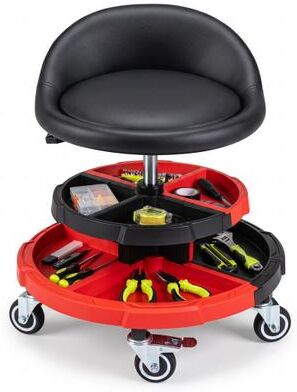
Products related to Costway-36-2-in-1-Mechanic:



-
What is the 1-2-2-1 system in volleyball?
The 1-2-2-1 system in volleyball is a defensive formation where there is one player positioned in the back row, two players in the middle, two players in the front row, and one player in the back row. This formation is commonly used to defend against the opponent's attacks and to set up offensive plays. The players in the middle and front rows are responsible for blocking and digging, while the back row player provides defensive coverage and sets up the offense. This system allows for a balanced defensive coverage and offensive setup. **
-
Why does 1 kWh correspond to 36 MJ?
1 kWh corresponds to 36 MJ because 1 kilowatt-hour is equal to 3.6 million joules (1 kW = 1000 J/s, and there are 3600 seconds in an hour). Since 1 MJ is equal to 1 million joules, 1 kWh is equivalent to 3.6 MJ. This conversion factor allows for easy comparison and calculation between the two units of energy. **
-
How can one become a Formula 1 mechanic?
To become a Formula 1 mechanic, one typically needs a strong background in automotive engineering or a related field. Many mechanics start by gaining experience in lower racing categories or working for automotive manufacturers. It is also important to have a good understanding of the technical aspects of Formula 1 cars and be able to work well under pressure in a fast-paced environment. Networking within the industry and gaining experience through internships or apprenticeships can also help in pursuing a career as a Formula 1 mechanic. **
-
How much does a Formula 1 mechanic earn?
The salary of a Formula 1 mechanic can vary depending on their experience, skills, and the team they work for. Entry-level mechanics can earn around $30,000 to $50,000 per year, while more experienced and senior mechanics can earn upwards of $100,000 per year. Mechanics working for top teams like Mercedes, Ferrari, or Red Bull may earn even higher salaries, with some senior mechanics potentially earning over $200,000 per year. Overall, the salary of a Formula 1 mechanic can be quite lucrative, especially for those with extensive experience and expertise. **


Why is 1 + 1 = 2 and 2 + 1 = 3?
In basic arithmetic, 1 + 1 equals 2 because when you combine one unit with another unit, you end up with a total of two units. Similarly, 2 + 1 equals 3 because when you add two units to one more unit, the total number of units becomes three. These equations follow the fundamental principles of addition, where the sum represents the total quantity when two or more numbers are combined. **
Is 1 + 1 really 2?
Yes, 1 + 1 is indeed equal to 2. This is a fundamental principle of arithmetic and mathematics. The concept of addition states that when you combine two individual quantities of 1, the result is 2. This principle is universally accepted and forms the basis of many mathematical operations and calculations. **
Top-Angebote
Products related to Costway-36-2-in-1-Mechanic:
-
How much does a mechanic in Formula 1 earn?
The salary of a mechanic in Formula 1 can vary depending on their experience, skills, and the team they work for. On average, a mechanic in Formula 1 can earn between $50,000 to $100,000 per year. However, top mechanics working for leading teams can earn significantly higher salaries, sometimes reaching into the six-figure range. **
-
Why does 1 kWh equal 36 MJ?
1 kWh is equal to 3.6 million joules (J). Since 1 kilowatt-hour (kWh) is a unit of energy commonly used in the electricity sector, it is equivalent to 3.6 million joules. The conversion factor between joules and megajoules (MJ) is 1 MJ = 1,000,000 J. Therefore, 1 kWh is equal to 3.6 MJ (3.6 million joules). **
-
What is the 1-2-2-1 system in volleyball?
The 1-2-2-1 system in volleyball is a defensive formation where there is one player positioned in the back row, two players in the middle, two players in the front row, and one player in the back row. This formation is commonly used to defend against the opponent's attacks and to set up offensive plays. The players in the middle and front rows are responsible for blocking and digging, while the back row player provides defensive coverage and sets up the offense. This system allows for a balanced defensive coverage and offensive setup. **
-
Why does 1 kWh correspond to 36 MJ?
1 kWh corresponds to 36 MJ because 1 kilowatt-hour is equal to 3.6 million joules (1 kW = 1000 J/s, and there are 3600 seconds in an hour). Since 1 MJ is equal to 1 million joules, 1 kWh is equivalent to 3.6 MJ. This conversion factor allows for easy comparison and calculation between the two units of energy. **
Similar search terms for Costway-36-2-in-1-Mechanic
-
How can one become a Formula 1 mechanic?
To become a Formula 1 mechanic, one typically needs a strong background in automotive engineering or a related field. Many mechanics start by gaining experience in lower racing categories or working for automotive manufacturers. It is also important to have a good understanding of the technical aspects of Formula 1 cars and be able to work well under pressure in a fast-paced environment. Networking within the industry and gaining experience through internships or apprenticeships can also help in pursuing a career as a Formula 1 mechanic. **
-
How much does a Formula 1 mechanic earn?
The salary of a Formula 1 mechanic can vary depending on their experience, skills, and the team they work for. Entry-level mechanics can earn around $30,000 to $50,000 per year, while more experienced and senior mechanics can earn upwards of $100,000 per year. Mechanics working for top teams like Mercedes, Ferrari, or Red Bull may earn even higher salaries, with some senior mechanics potentially earning over $200,000 per year. Overall, the salary of a Formula 1 mechanic can be quite lucrative, especially for those with extensive experience and expertise. **
-
Why is 1 + 1 = 2 and 2 + 1 = 3?
In basic arithmetic, 1 + 1 equals 2 because when you combine one unit with another unit, you end up with a total of two units. Similarly, 2 + 1 equals 3 because when you add two units to one more unit, the total number of units becomes three. These equations follow the fundamental principles of addition, where the sum represents the total quantity when two or more numbers are combined. **
-
Is 1 + 1 really 2?
Yes, 1 + 1 is indeed equal to 2. This is a fundamental principle of arithmetic and mathematics. The concept of addition states that when you combine two individual quantities of 1, the result is 2. This principle is universally accepted and forms the basis of many mathematical operations and calculations. **
* All prices are inclusive of VAT and, if applicable, plus shipping costs. The offer information is based on the details provided by the respective shop and is updated through automated processes. Real-time updates do not occur, so deviations can occur in individual cases. ** Note: Parts of this content were created by AI.